The New York Times recently ran an opinion piece from Robert F. Kennedy Jr and three other Trump administration officials in which they argue in favor of adding work requirements to Medicaid, the health insurance program for low-income Americans.
At one point in the piece, they write that:
A recent analysis from an economist at the American Enterprise Institute [AEI] examined survey data from December 2022 (the most recent month available) and found that just 44 percent of able-bodied, working-age Medicaid beneficiaries without dependents worked at least 80 hours in that month.
I have produced figures like this in the past, typically by analyzing the Annual Social and Economic Supplement of the Current Population Survey (CPS ASEC). I found this particular estimate intriguing because it uses the Survey of Income and Program Participation (SIPP) rather than the CPS ASEC. So I figured I would dive into the SIPP to see what numbers it actually provides about this topic.
According to the SIPP, in December of 2022, the US population was 328.6 million people, of whom 73.2 million were receiving Medicaid.Of those on Medicaid, 6.7 million are elderly, 29.3 million are children, and the remaining 37.2 million are working-age adults.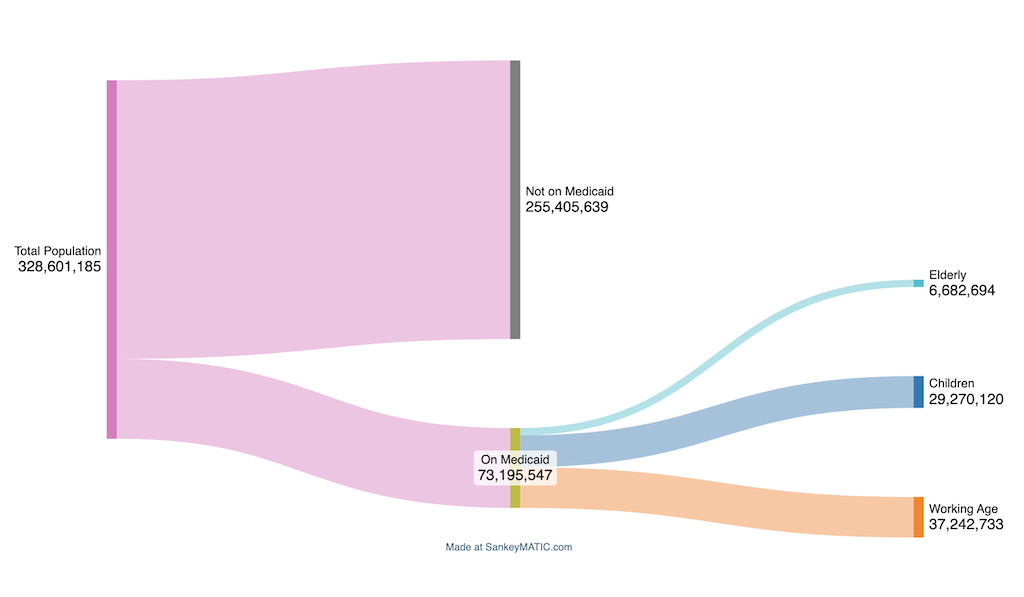
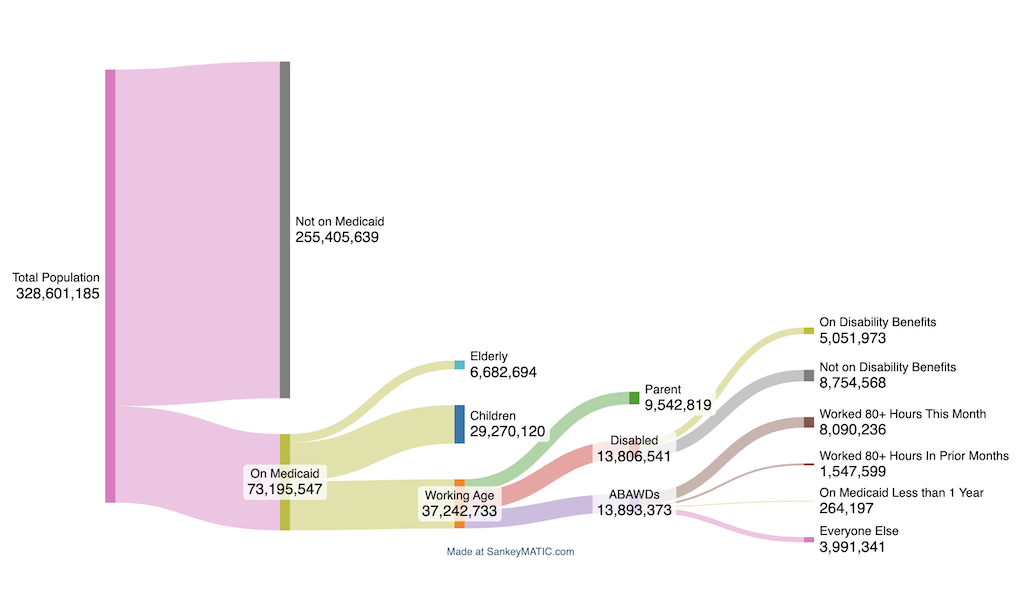
Of the working-age adults on Medicaid, 9.5 million are parents, 13.8 million are disabled, and 13.9 million are able-bodied adults without dependents (ABAWDs).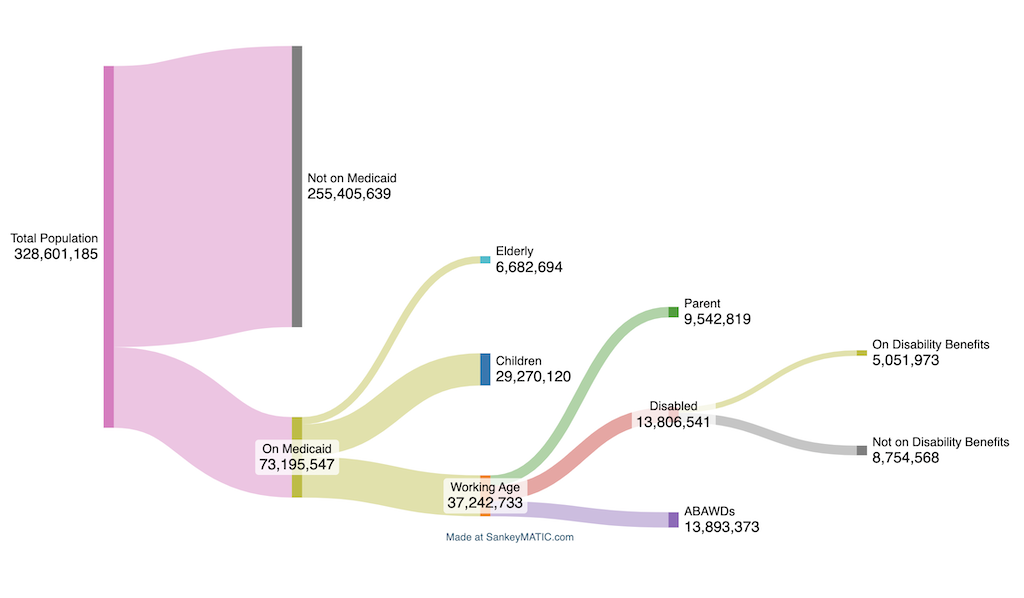 Of the ABAWDs on Medicaid, 8.1 million (58 percent) worked eighty or more hours in December of 2022. Another 1.5 million worked eighty or more hours in a prior month in 2022 while another 0.3 million had been enrolled in Medicaid for less than a year. Combining all three of these figures shows that there are only 4 million ABAWDS who are persistently enrolled in Medicaid and work fewer than eighty hours a month. This is about 29 percent of ABAWDs, 5 percent of all Medicaid recipients, and 1 percent of the US population.
 My results significantly differ from…
Auteur: Matt Bruenig
